 By Dr. Taylor, Aesthetic Medicine Specialist
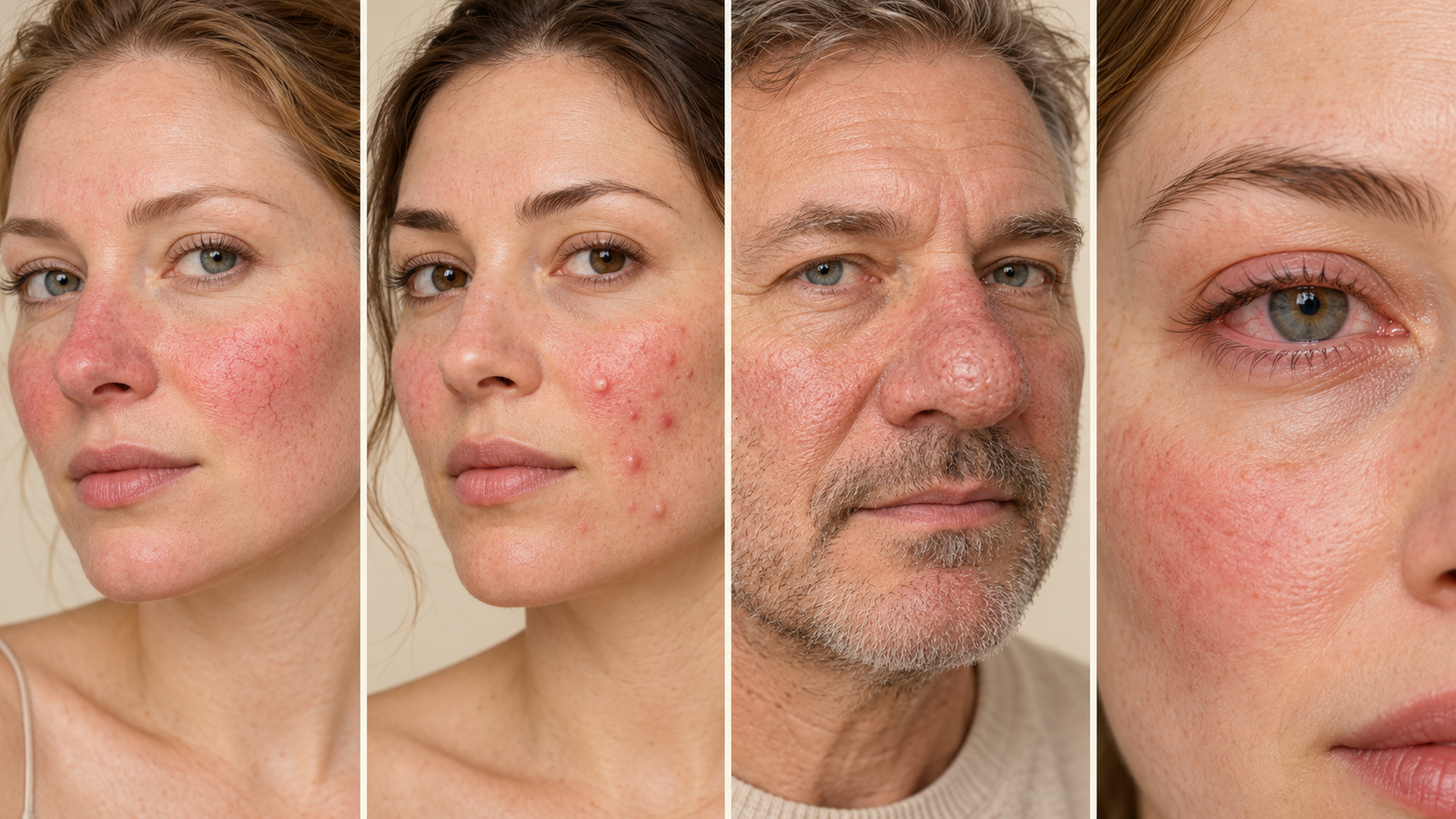
Rosacea is not the same for everyone. On the face, it can show up as frequent flushing, constant redness, visible small blood vessels, acne-like bumps, skin thickening, or eye irritation. The classic way of describing rosacea divides it into four types, but modern dermatology also uses a phenotype approach, which means doctors focus on the exact features a person has because many people have overlap rather than just one neat category.
Quick answer: what are the types of rosacea on the face?
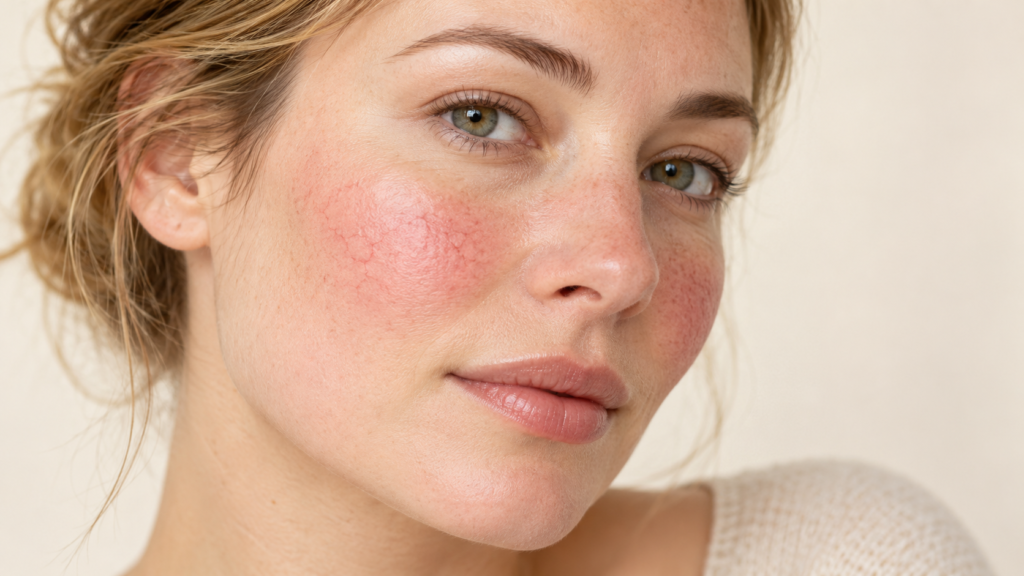
- Erythematotelangiectatic rosacea (ETR): mainly flushing, long-lasting central facial redness, and sometimes visible tiny blood vessels.
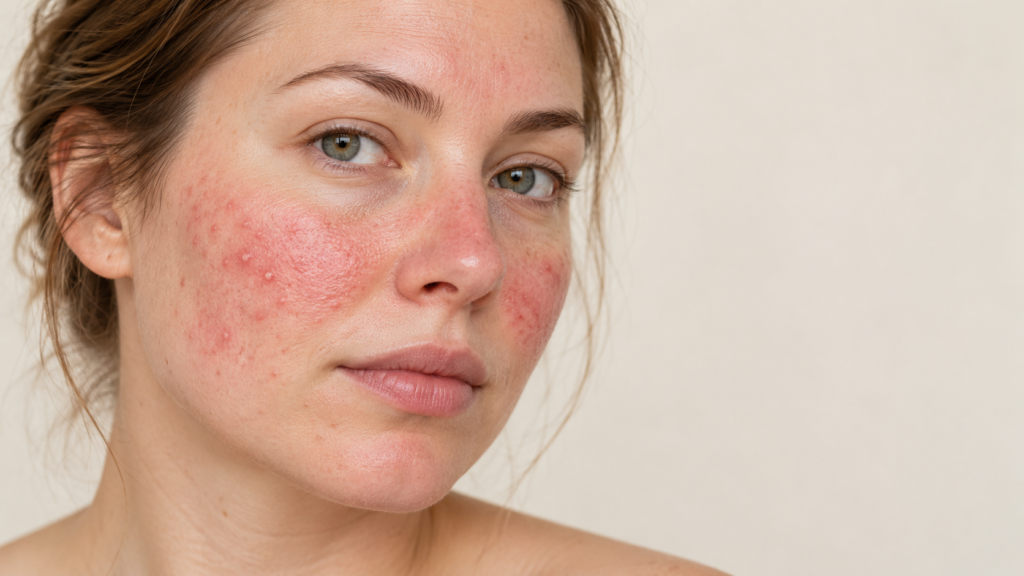
- Papulopustular rosacea: redness plus red bumps and pus-filled spots that can look similar to acne.
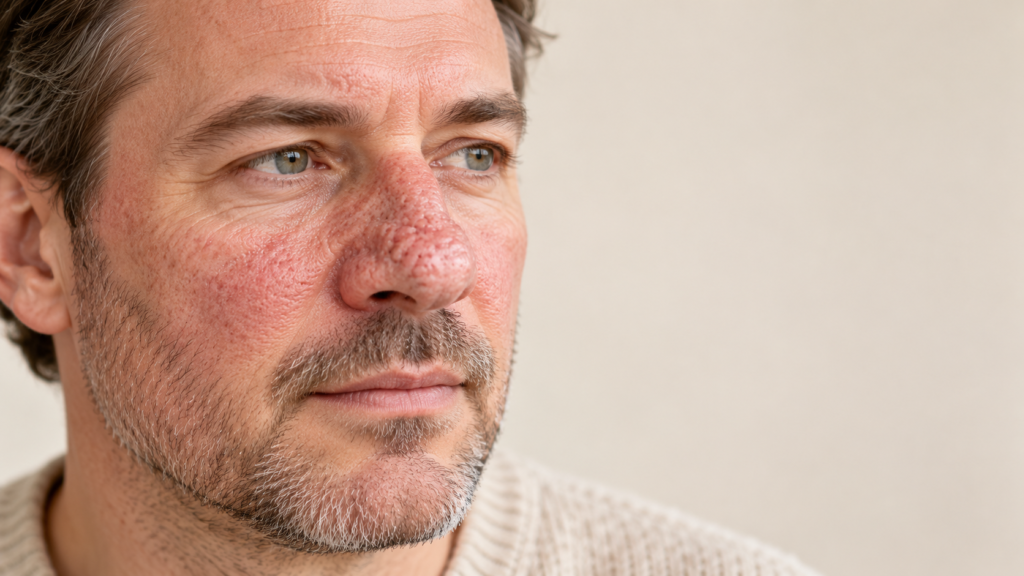
- Phymatous rosacea: thickened, uneven, sometimes enlarged skin, most often on the nose.
- Ocular rosacea: rosacea that affects the eyes and eyelids, causing dryness, burning, redness, watering, or light sensitivity.
These types are not mutually exclusive. One person may have facial redness and breakouts together, and some people with rosacea also develop eye symptoms.
What is rosacea?
Rosacea is a chronic inflammatory skin condition that mainly affects the central face, especially the cheeks and nose. It can also involve the chin and forehead, and in some people it extends to the ears, scalp, neck, or upper chest. The eyes may be affected as well.
Rosacea can occur in different skin tones. In lighter skin it often looks red or pink, while in darker skin it may look more violet, brown, or simply feel warm and sensitive. In some people with deeper skin tones, bumps, swelling, burning, or patches of darker discoloration may be more noticeable than visible redness.
How dermatologists classify rosacea today
The older subtype model is still very useful for explaining rosacea to patients, which is why you still see the four classic types listed above. However, an updated classification published through the National Rosacea Society expert process shifted toward a phenotype-based model. In plain language, that means treatment is increasingly matched to the features you actually have, such as persistent redness, flushing, visible blood vessels, papules and pustules, phymatous thickening, or ocular symptoms.
This matters because rosacea often behaves like a spectrum rather than four completely separate diseases. A person may start with easy flushing, later develop persistent redness, and at some point also get bumps, visible vessels, or eye irritation.
Types of rosacea on the face at a glance
| Rosacea type | What it usually looks like | Common sensations | Common areas |
|---|---|---|---|
| Erythematotelangiectatic | Flushing, persistent redness, visible tiny blood vessels | Burning, stinging, warmth, sensitivity | Cheeks, nose, central face |
| Papulopustular | Red bumps and pus-filled spots on a red background | Tenderness, burning, irritation | Cheeks, nose, forehead, chin |
| Phymatous | Thickened, bumpy, enlarged skin texture | Less about stinging, more about contour change | Usually the nose, sometimes chin, forehead, ears, or eyelids |
| Ocular | Bloodshot or irritated eyes, inflamed eyelids | Dryness, grittiness, burning, light sensitivity | Eyes and eyelids |
This table summarizes the classic subtype descriptions still commonly used in patient education. In current practice, dermatologists often treat rosacea by phenotype because several features may exist together in the same person.
1. Erythematotelangiectatic rosacea
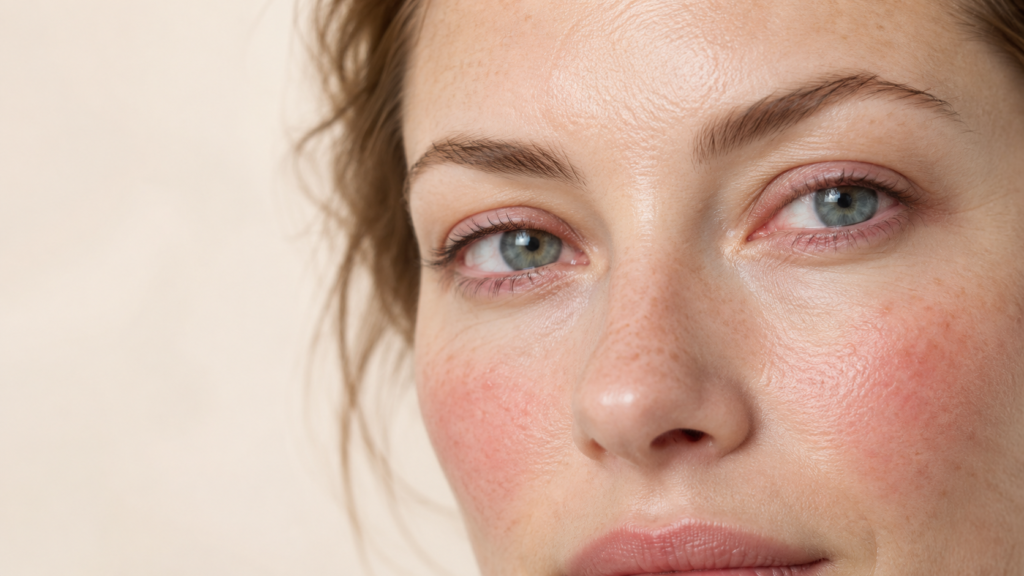
Erythematotelangiectatic rosacea, often shortened to ETR, is the type most strongly associated with flushing and persistent central facial redness. It often affects the cheeks and nose first. Small visible blood vessels may appear over time; the medical term for these is telangiectasia.
Many people with ETR also describe burning, stinging, warmth, dryness, or a face that seems unusually reactive to skin care products, wind, heat, or sun exposure. In darker skin tones, the color change may be harder to see, so warmth, sensitivity, or a brown-violet discoloration may be more obvious than bright redness.
This type is often mistaken for “just sensitive skin,” sun damage, or a tendency to blush easily. In reality, persistent facial redness is one of the key diagnostic features of rosacea.
2. Papulopustular rosacea
Papulopustular rosacea causes redness plus inflammatory bumps. Dermatologists describe the solid red bumps as papules and the pus-filled spots as pustules. These often appear in crops on the central face and can come and go.
Because the breakout pattern can look acne-like, this type is commonly confused with adult acne. However, the surrounding skin is often quite sensitive, and the bumps usually sit on a background of rosacea redness rather than behaving exactly like classic acne.
This type may improve with prescription treatments aimed at rosacea inflammation rather than standard over-the-counter acne routines. That is one reason aggressive scrubs, frequent exfoliation, or strong acne products can backfire and increase irritation.
3. Phymatous rosacea
Phymatous rosacea is the thickening form of rosacea. The skin gradually becomes firmer, bumpier, and more uneven in contour. When this thickening affects the nose, it is called rhinophyma.
Although the nose is the most common site, phymatous changes can also affect the chin, forehead, ears, or eyelids. Men are more likely than women to develop this sign.
Phymatous rosacea is less common than the redness or breakout forms, but it is important not to ignore. Early evaluation matters because once thickening becomes established, treatment may require procedural care such as laser surgery, electrosurgery, radiofrequency, or other contouring techniques performed by an experienced dermatologist or dermatologic surgeon.
4. Ocular rosacea
Ocular rosacea affects the eyes and eyelids. Symptoms can include dryness, grittiness, burning, stinging, tearing, bloodshot eyes, swollen eyelids, light sensitivity, crusting around the lashes, and sometimes recurrent stye-like bumps.
Importantly, eye involvement does not always match how severe the facial skin looks. Some people develop eye symptoms before obvious skin rosacea appears, which is one reason ocular rosacea can be missed.
Any rosacea affecting the eyes deserves prompt medical attention. If eyesight may be threatened, the American Academy of Dermatology notes that immediate ophthalmology referral is needed. Vision changes, significant eye pain, marked light sensitivity, or worsening eye inflammation should not be treated as routine skin symptoms.
Can you have more than one type of rosacea?
Yes. In fact, overlap is common. Someone may have persistent redness and visible blood vessels, while also getting papules and pustules during flares. Another person may have mild facial rosacea but significant eye symptoms. This overlap is exactly why newer rosacea guidelines emphasize phenotype-based care.
What rosacea is often mistaken for
Rosacea can resemble several other conditions. Depending on the pattern, it may be confused with acne, seborrheic dermatitis, lupus, steroid-induced rosacea, or other causes of long-lasting facial redness. Dermatologists diagnose rosacea by examining the skin and eyes, and sometimes they order testing or, less commonly, a skin biopsy to rule out another condition.
If you have persistent facial flushing, bumps that do not behave like acne, or recurring eye irritation, self-diagnosis can be unreliable. Getting the diagnosis right matters because the best treatment for rosacea is not always the same as the best treatment for acne, eczema, or sun-related redness.
When to see a dermatologist
Consider making an appointment if you notice any of the following:
- Persistent facial redness or easy flushing that keeps returning.
- Acne-like breakouts that do not clear with standard acne treatment.
- Visible blood vessels on the cheeks or nose.
- Burning, stinging, or very reactive skin when you wash your face or apply products.
- Skin thickening, especially on the nose or around the central face.
- Eye symptoms such as dryness, bloodshot eyes, swollen lids, styes, light sensitivity, or changes in vision.
Early treatment does not “cure” rosacea, but it can help control symptoms, improve comfort, and reduce the risk of progression in some people.
Gentle skin care can help every rosacea type
Even though prescriptions and procedures vary by rosacea type, one part of treatment is consistent: the skin barrier needs to be treated gently. The American Academy of Dermatology recommends a mild cleanser, daily moisturizer, and broad-spectrum sunscreen with SPF 30 or higher. Mineral sunscreens containing zinc oxide, titanium dioxide, or both are often better tolerated.
It is also wise to avoid rubbing, scrubbing, harsh exfoliators, and skin care products that sting. Patch-testing new products can be helpful if your skin is reactive. Common rosacea triggers vary from person to person, but heat, sunlight, alcohol, spicy foods, and irritating skin care are well-known examples.
If you already use active ingredients such as retinoids, alpha hydroxy acids, or benzoyl peroxide, introduce them cautiously and not during a severe flare unless a clinician has advised otherwise. Some products that are useful for acne can aggravate rosacea-prone skin, especially when used too often or in strong formulas.
Final thoughts
The main types of rosacea on the face are erythematotelangiectatic, papulopustular, phymatous, and ocular rosacea. That said, many people do not fit into just one box. Modern rosacea care focuses on the real-world pattern of symptoms you have, which may include persistent redness, flushing, visible vessels, bumps, skin thickening, and eye involvement in different combinations.
If you are seeing recurring facial redness, acne-like breakouts, or irritated eyes, a dermatologist can help confirm whether it is rosacea and guide treatment safely. A good plan usually combines trigger awareness, gentle skin care, sun protection, and treatment matched to your specific rosacea features.