 By Dr. Taylor, Aesthetic Medicine Specialist
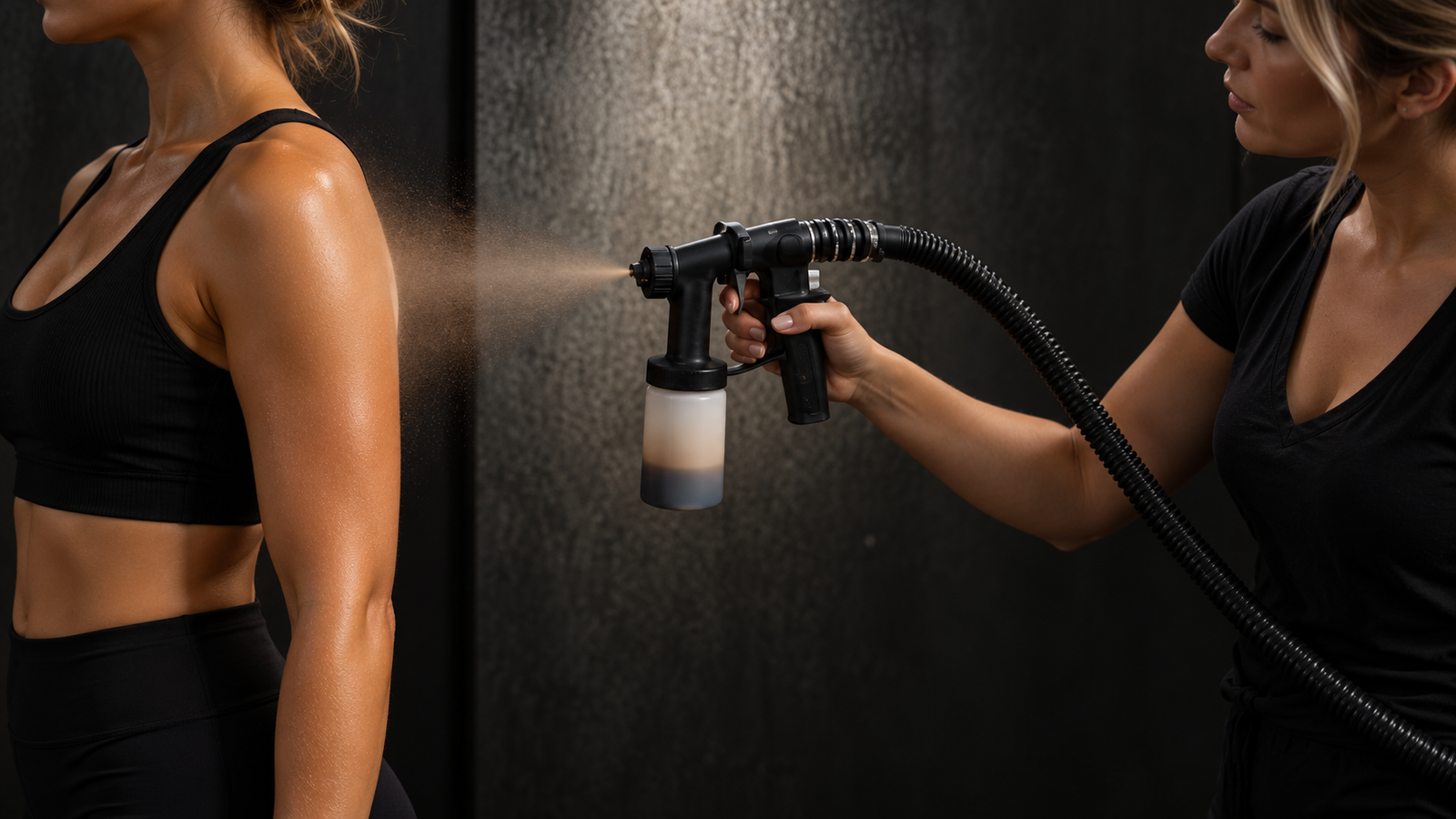
Usually, no. A spray tan is not a classic or inevitable cause of acne. However, some people do break out after a spray tan because the overall formula may be too heavy, pore-clogging, or irritating for acne-prone skin, or because sweat, friction, and occlusion after the tan aggravate existing breakouts. The color in most sunless tanning products comes from dihydroxyacetone (DHA), which reacts with amino acids in the outer layer of skin rather than directly treating or targeting the pore where acne develops.
In other words, if you notice pimples after a spray tan, the problem is usually not “tanning” itself. It is more often the cosmetic formula, leftover product on the skin, or irritation that makes acne-prone skin less happy. Published reviews of sunless tanners focus more on irritant or allergic contact dermatitis than on acne as a typical adverse effect, so a breakout after tanning is best thought of as a possible indirect reaction, not a predictable effect for everyone.
What a Spray Tan Actually Does
Spray tans and other sunless tanners do not create a real tan from ultraviolet (UV) exposure. Instead, they temporarily darken the skin surface. FDA explains that DHA, the main active ingredient in many sunless tanners, reacts with the dead surface cells in the epidermis and the result usually lasts for several days. That is why the color fades as your skin naturally sheds.
From a skin health perspective, that is very different from tanning beds or sunbathing. The American Academy of Dermatology notes that tanning damages the skin and can worsen acne, while FDA also emphasizes that sunless tanning products generally do not provide meaningful sun protection. A spray tan may change your color, but it does not replace sunscreen.
There is also an important safety point: FDA restricts DHA to external application and advises avoiding exposure to the eyes, lips, and other mucous membranes, as well as avoiding inhalation or ingestion during spray tanning. That issue is separate from acne, but it matters if you get professional spray tans regularly.
Why a Spray Tan Can Sometimes Trigger Breakouts
Dermatologists use the term acne cosmetica for breakouts that are triggered or worsened by cosmetic products. Modern acne research also recognizes that cosmetics can aggravate acne when they are comedogenic, meaning they promote the formation of tiny clogged pores called microcomedones. Occlusive products can also change the follicle environment in ways that favor breakouts.
That matters because a spray tan formula is not just DHA. Depending on the product, it may also contain bronzers, moisturizers, fragrance, preservatives, emulsifiers, or oils. FDA notes that “bronzers” can function like temporary makeup, and dermatology reviews show that self-tanning products commonly contain ingredients that may trigger irritant or allergic contact dermatitis in some users. A reasonable clinical inference is that when acne-prone skin reacts after a spray tan, the whole formulation is usually more relevant than DHA alone.
- Heavier cosmetic ingredients: Acne-prone skin may flare when a product is too rich or too occlusive, especially on the face, chest, shoulders, or back.
- Instant bronzers or tinted additives: Some spray tans include wash-off colorants that behave more like makeup, which can be a problem if your skin already reacts to certain cosmetic products.
- Irritation and barrier disruption: If a formula stings, dries, or irritates the skin, inflammation can make acne-prone skin look worse, even if the bumps are not classic acne.
- Sweat, friction, and occlusion after the tan: Tight clothing, exercise, or rubbing can contribute to acne mechanica, a type of breakout linked to heat, pressure, and friction.
Who Is More Likely to Break Out After a Spray Tan?
You may be more likely to notice post-tan breakouts if you already have oily or acne-prone skin, a history of reacting to makeup or fragranced body products, active chest or back acne, or sensitive skin that easily becomes red or irritated. The AAD notes that people with acne often find that some cosmetic products worsen existing breakouts, and self-tanner reviews show that contact allergens are common in this product category.
Facial spray tans can be a little trickier than body spray tans because the face is often already covered with sunscreen, moisturizer, or makeup, and the facial skin has more obvious sebaceous activity. If you are prone to clogged pores around the forehead, cheeks, or jawline, layering a tanning mist over multiple products can increase the chance of congestion. That does not mean everyone with acne should avoid spray tans, but it does mean product selection and prep matter more.
How to Lower the Risk if You Have Acne-Prone Skin
- Choose lighter, acne-friendly formulas when possible. Look for products described as oil-free, non-comedogenic, or “won’t clog pores.” The AAD recommends these labels for acne-prone skin, although no label can guarantee that every person will tolerate a product the same way.
- Start with clean skin, especially on the face. If you are getting a facial spray tan, removing makeup and heavy skincare beforehand may reduce the amount of product layering on acne-prone pores. AAD guidance for acne-prone skin also emphasizes gentle cleansing and fully removing makeup.
- Be careful with post-tan add-ons. Extra body oils, thick fragranced moisturizers, and tight athletic clothing can be more of a breakout issue than the tan itself, especially on the chest and back. Friction and occlusion are known acne aggravators.
- If you exercise, shower after heavy sweating. Sweat and friction can worsen acne in some people, so this is particularly helpful if you are prone to body acne. Use a gentle cleanser rather than harsh scrubbing.
- Patch test if your skin is sensitive. Self-tanning products can cause irritant or allergic contact dermatitis, and that can easily be mistaken for a breakout if you are not looking closely. A small test area can be sensible if you have reacted to fragranced or cosmetic products before.
- Do not skip sunscreen. A spray tan is cosmetic color, not reliable UV protection. FDA specifically notes that most sunless tanning sprays and lotions do not contain a skin-protecting sunscreen.
Could It Be Irritation Instead of Acne?
This is an important distinction. True acne usually shows up as clogged pores, blackheads, whiteheads, inflamed red bumps, or deeper tender lesions. An irritated reaction from a spray tan is more likely to feel itchy, sting, burn, or appear as a red rash with many small similar-looking bumps. FDA has received reports of rashes with sunless tanning products, and dermatology reviews describe both irritant and allergic contact dermatitis from self-tanner ingredients.
If the bumps appeared very quickly, feel itchy rather than sore, or are spreading beyond your usual acne-prone areas, irritation is more likely than classic acne. In practice, that is one of the most common reasons people say a spray tan “caused acne” when the reaction is actually a form of dermatitis. That is a clinical inference, but it fits the published pattern of reported reactions to sunless tanners.
When to See a Dermatologist
Consider professional advice if breakouts keep recurring after every spray tan, you develop painful cyst-like acne, you are getting scarring or dark marks, or the reaction seems more like dermatitis than acne. A dermatologist can help sort out whether the issue is acne cosmetica, irritation, allergy, follicular occlusion, or something unrelated to the spray tan altogether. The AAD also notes that finding the product trigger can be difficult when several cosmetics or skin-care products are involved at the same time.
Final Thoughts
So, do spray tans cause acne? For most people, not directly. But they can contribute to breakouts if the product is too occlusive, too irritating, or layered onto already acne-prone skin. If you want the look of a tan and are prone to pimples, the safest approach is to treat a spray tan like any other cosmetic: choose acne-friendly formulas, keep the skin routine simple, avoid heavy add-ons, and pay attention to whether your skin is showing acne or irritation. And remember, a spray tan may give color without UV exposure, but it is not sun protection.