 By Dr. Taylor, Aesthetic Medicine Specialist
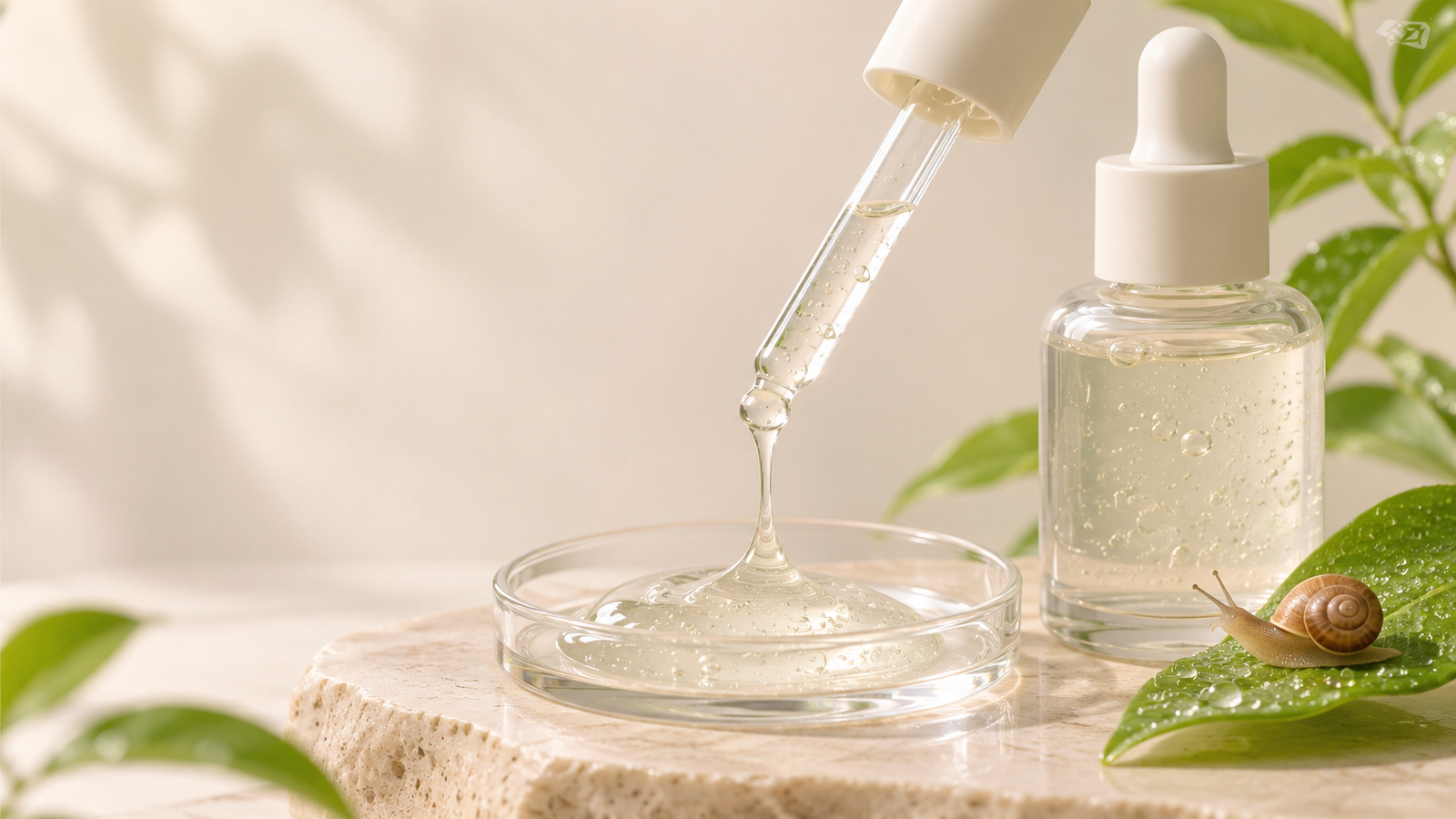
If you are wondering whether snail mucin causes acne, the short answer is: usually not by itself, but it can contribute to breakouts in some people. Snail mucin is mostly used as a hydrating cosmetic ingredient, and the published literature on it is still limited. Reviews note that many of the claimed benefits come from preclinical or small clinical studies, while dermatology guidelines for acne still focus on better-studied treatments such as retinoids, benzoyl peroxide, salicylic acid, and azelaic acid. At the same time, dermatologists recognize that some skin-care products can trigger acne cosmetica when they clog pores or irritate the skin.
Quick Answer
- No, snail mucin does not automatically cause acne. On its own, it is better understood as a moisturizing skincare ingredient than a proven acne trigger.
- Some people still break out after using it. When that happens, the problem may be the full formula, pore-clogging or very occlusive ingredients in the product, irritation, or an individual sensitivity rather than the snail secretion filtrate alone.
- Snail mucin is not a standard acne treatment. The American Academy of Dermatology acne guidance highlights ingredients such as topical retinoids, benzoyl peroxide, salicylic acid, and azelaic acid instead.
- If you are acne-prone, the safest approach is to choose a non-comedogenic product and patch test first.
What Is Snail Mucin?
In skincare, “snail mucin” usually refers to snail secretion filtrate. It is a complex mixture that can contain glycoproteins, glycosaminoglycans, peptides, allantoin, and small amounts of other compounds such as glycolic acid. Its exact composition can vary depending on the snail species and how the secretion is collected and processed, which is one reason different products may not behave the same way on the skin.
That matters because consumers often talk about snail mucin as if it were one single ingredient with one predictable effect. In reality, the finished product matters just as much as the headline ingredient. A lightweight, fragrance-free essence can behave very differently from a richer cream that also contains oils, butters, or other potentially comedogenic additives.
Does Snail Mucin Cause Acne?
For most people, there is no strong evidence that snail mucin itself is a reliable cause of acne. The better evidence says something narrower: skincare products can worsen acne if they clog pores or irritate the skin, and snail mucin products are not exempt from that general rule. Dermatology sources recommend looking for labels such as non-comedogenic, oil-free, or won’t clog pores if you are prone to breakouts.
So, if you used a snail mucin product and then broke out, it does not necessarily mean snail mucin is “bad for acne.” It may mean that particular product was too occlusive for your skin, that another ingredient in the formula was the issue, or that your skin became irritated and inflamed. Acne-prone skin is often reactive, and irritation itself can make the skin look worse.
Why Some People Break Out After Using Snail Mucin
The whole formula may be the real problem
Acne is often aggravated by oily or occlusive products rather than by one trendy ingredient in isolation. DermNet notes that comedonal acne may be worsened by oily cosmetics and petroleum-based moisturizers, and the AAD advises acne-prone patients to use products labeled non-comedogenic or oil-free. If a snail mucin cream is rich, greasy, or layered on heavily with other moisturizers, it may be more likely to contribute to clogged pores.
Irritation can look like a breakout
Not every new bump after a product is true acne. Some reactions are irritant dermatitis or sensitivity. The 2024 review on snail extract specifically notes allergy investigation and missing safety data as limitations in the literature, and the AAD recommends testing new skin-care products on small areas first to look for redness, itching, or swelling. If a snail mucin product burns, stings, makes your skin itchy, or causes a rash, that points more toward irritation or allergy than a simple acne flare.
Timing can be misleading
Acne cosmetica does not always appear overnight. The AAD notes that product-related acne can take anywhere from a few days to as long as six months to show up, which is one reason people often blame the wrong product or assume a new breakout is hormonal or random.
A “purge” is not the first thing I would assume
Snail mucin is not listed among the standard acne actives in current AAD guidance. If a product marketed as snail mucin also contains retinoids, salicylic acid, glycolic acid, or other exfoliating ingredients, any early flare or irritation may be due to those added actives rather than the snail ingredient itself.
Can Snail Mucin Help Acne?
Possibly, but the evidence is limited and it should not be presented as a proven acne treatment. A 2024 review describes snail mucin as being used in cosmetic products marketed for anti-acne purposes, but it also emphasizes that most of the supporting studies are preclinical or small clinical studies.
The most relevant human study here is a randomized, placebo-controlled trial of a facial serum containing snail secretion filtrate plus calendula and licorice root extract for mild to moderate maskne. After 12 weeks, the treatment group had a greater reduction in inflammatory acne lesions than placebo, but there was no significant difference in non-inflammatory lesions, and the effect cannot be attributed to snail mucin alone because this was a combination formula. Reported adverse events were mild. That makes snail mucin look more like a possible adjunct in some formulas, not a stand-alone acne solution.
Who Should Be More Careful?
- People with very acne-prone or easily clogged skin: richer creams and oily products are more likely to be a problem than lightweight, non-comedogenic formulas.
- People with sensitive skin, eczema, or a history of contact reactions: patch testing is especially sensible, because irritation and allergy are possible with any new cosmetic product, including snail-based ones.
- People with known snail or mollusk allergy: it is reasonable to avoid topical snail products unless a dermatologist or allergist advises otherwise.
- People with strong dust-mite allergy: published allergy literature describes IgE cross-reactivity between snail and house-dust-mite allergens after ingestion. That does not prove a topical snail mucin serum will cause a skin reaction, but it is a reasonable reason for extra caution and patch testing. This is an inference from allergy data, not a firm rule for every skincare user.
How to Try Snail Mucin if You Are Acne-Prone
- Choose the formula carefully. Look for products labeled non-comedogenic, oil-free, and ideally fragrance-free if your skin is easily irritated.
- Patch test before full use. The AAD recommends testing a new product on small areas of skin first and watching for a reaction over seven to 10 days.
- Check the full ingredient list. A breakout after a “snail mucin” product may be related to other ingredients in the formula, especially heavy occlusives or added acne actives.
- Keep the rest of your routine simple. If you are already using benzoyl peroxide, a retinoid, salicylic acid, or azelaic acid, adding multiple new products at once makes it harder to tell what is helping and what is irritating your skin. Those ingredients remain the evidence-based core treatments for acne.
- Stop if your skin clearly worsens. Repeated whiteheads, clogged pores, a burning sensation, itching, or a rash are good reasons to stop and reassess.
When to See a Dermatologist
Consider professional advice if you have deep, painful, or scarring acne; if your breakouts keep recurring despite using non-comedogenic products; or if you develop significant redness, swelling, itching, or a rash after a new skincare product. A dermatologist can help tell the difference between acne, acne cosmetica, irritation, contact dermatitis, and other look-alike conditions. If irritation keeps happening with multiple products, formal patch testing may be helpful.
Final Thoughts
Snail mucin does not appear to be an automatic acne trigger, and some people tolerate it very well. But it is also not a magic acne treatment, and it can still be a poor fit for certain skin types, formulas, or sensitive skin. If you are acne-prone, think less about the trend and more about the full formulation: non-comedogenic, low-irritation, and compatible with the rest of your routine. That is usually what matters most.